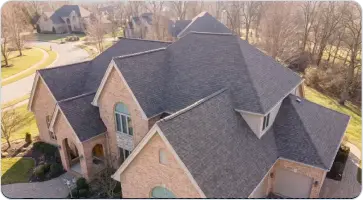
Ballantyne West sits on the western side of Charlotte's far-south Ballantyne area, one of the largest master-planned communities in the Southeast. The land was rezoned in 1992 and built out largely through the 1990s and 2000s, so the subdivisions here are full of larger, newer homes on their original architectural shingles. Those roofs went on 20 to 30 years ago. That means a big share of Ballantyne West is now hitting its first roof-replacement cycle at the same time. These are Piedmont roofs, built for roughly 43.6 inches of rain a year and a Mecklenburg design wind of about 115 mph, and wind and hail drive close to 40% of homeowner claims here.
When you replace a roof in Ballantyne West, SkyeVantage coordinates the whole job and supplies the materials at wholesale cost. Synthetic underlayment across the deck. Self-adhering membrane at the valleys and every penetration for water management. Drip edge, ridge cap, and ridge ventilation to move the summer heat out of the attic. Wind-rated shingles installed to the roughly 115 mph Mecklenburg wind zone, sealed and nailed to spec. A Preferred Roofing Network crew handles the tear-off and the install. Axium inspects the finished roof. In a subdivision where roofs were built to match, we can help you hold the original architectural line so the house still fits the street.
One flat fee covers the coordination, the labor, the materials setup, and the dumpster. That's how you get everything at cost. You see the receipt. We're not here to sell you a roof. We're here to service the home.
Ballantyne West sits in a humid subtropical climate (Köppen Cfa). NOAA 1991-2020 normals for Charlotte: about 43.6 inches of rain a year, a July average near 80°F with highs around 90°F, a January average near 42°F, and only about 3.5 inches of snow. Here is what that means for a roof.
- High wind and tropical remnants: the roughly 115 mph design wind is the key structural driver. Peak risk runs through spring and summer storms, with tropical remnants from August into October. Implication: wind-rated shingles with sealed nailing.
- Hail: North Carolina sees frequent severe hail. Implication: an impact-resistant (Class 4) option is worth pricing, and it matters for insurance.
- Summer heat and UV: July averages near 80°F with highs around 90°F. Implication: thermal cycling and granule loss over time, so attic ventilation earns its keep.
- Humidity and algae: 43.6 inches of annual rain in a humid climate feeds black algae streaking. Implication: algae-resistant shingles (StreakGuard or copper-granule technology) keep the roof from streaking.
- Minimal snow: only about 3.5 inches a year. Implication: snow load is a minor design factor here, unlike northern markets.
Asphalt shingle systems only. Homeowners pick the brand. SkyeVantage supplies it at wholesale cost. A Preferred Roofing Network crew certified for that product handles the install to lifetime-warranty spec.
- Class 4 impact-resistant (hail and high wind): GAF Timberline AS II, Owens Corning Duration FLEX. Impact-rated shingles may qualify for a North Carolina insurance premium discount, carrier-dependent.
- Architectural (the regional standard, algae-resistant): GAF Timberline HDZ (with StainGuard Plus), Owens Corning Duration (with StreakGuard), CertainTeed Landmark (with StreakFighter), Atlas Pinnacle Pristine (with Scotchgard). Algae resistance matters in the humid Southeast, and these lines let you match the original architectural shingle on a Ballantyne West subdivision home.
- Designer (premium): Owens Corning Duration Designer (Onyx Black, Pacific Wave), CertainTeed Presidential Shake, GAF Grand Sequoia.